
How to Select an Integrative Health Billing Company in Skokie
Expert Medical Billing offers high-quality medical billing, coding, and revenue cycle management. Improve billing efficiency and increase revenue per visit.
April 20, 2026 · 9 min read · Skokie

Integrative practices often combine conventional medicine with preventive care, nutrition, behavioral health, lifestyle management, and complementary services. Because these services can have different coverage rules, documentation standards, and payment arrangements, billing can quickly become complex.
For practices looking for a reliable Health Billing Company in Skokie, the right partner should do more than submit insurance claims. It should understand the complete financial workflow, from eligibility verification and coding to denial management, payment posting, and accounts receivable follow-up.
A well-organized billing process can also help providers spend less time resolving administrative problems. The goal is to create a predictable system that supports accurate reimbursement, clearer patient balances, and sustainable practice growth.
What Makes Integrative Health Billing Different from Standard Medical Billing?
Integrative healthcare often involves several types of providers and treatment approaches under one practice. That makes billing less straightforward than it may be for a clinic delivering a narrower range of services.
Technology is also important. Information recorded within Electronic Health Records (EHR) can support the billing workflow by keeping clinical information accessible for documentation, coding, and claim preparation. However, technology alone cannot correct incomplete documentation or determine whether a particular service meets a payer's requirements.
Multiple Treatment Types and Services
A patient may receive an evaluation, preventive counseling, chronic disease management, nutritional guidance, and other services during the same overall treatment period. Each service needs to be evaluated according to its own billing requirements.
The billing team must determine what was performed, whether separate services can appropriately be reported, and whether the clinical record supports the codes submitted. This makes coordination between providers, coders, and billing staff especially important.
Insurance and Self-Pay Billing
Integrative practices frequently operate with a mixture of insurance-covered and self-pay services. A patient's health plan might cover an office visit but exclude certain wellness or complementary services.
Practices therefore need a clear process for verifying coverage and communicating expected patient responsibility. Self-pay fees, packages, memberships, and non-covered services should be separated from insurance billing so that patients receive understandable financial information.
A well-configured EMR or related practice system can also help staff organize patient and clinical information, but billing policies still need to account for the specific rules of each payer.
Documentation and Coding Requirements
Documentation needs to explain why a service was provided and support what appears on the claim. Missing details can create problems even when the provider delivered appropriate care.
An important part of Medical Billing and Coding is understanding the difference between procedure and diagnosis coding. Knowing CPT vs. ICD-10 Codes helps practices connect the services performed with the patient's documented diagnoses and clinical circumstances.
Integrative clinics should develop consistent documentation habits across providers. This becomes particularly valuable when physicians, therapists, nutrition professionals, and other practitioners use different documentation styles.
What Are the Most Common Billing Challenges for Integrative Health Practices?
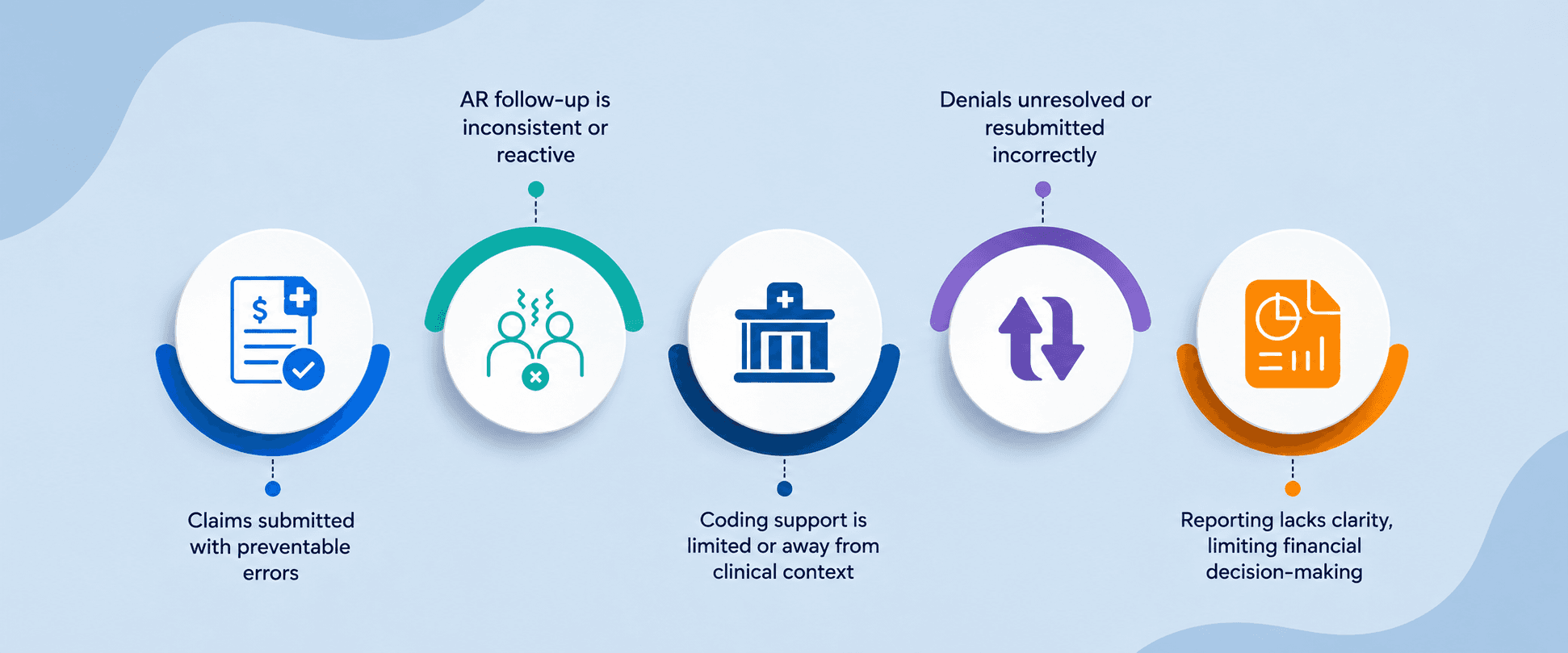
Coverage uncertainty is one of the biggest difficulties. Benefits can vary significantly among insurance plans, even when patients receive similar services. Eligibility, deductibles, copayments, authorization requirements, provider credentials, and coverage exclusions should therefore be reviewed when applicable.
Coding is another common source of problems. The Current Procedural Terminology (CPT) code set provides standardized terminology for reporting medical procedures and services. Selecting an appropriate code still requires documentation that accurately reflects the service delivered.
Integrative practices may also encounter delayed claims, incorrect demographic information, missing authorizations, payer requests for additional documentation, unpaid patient balances, and growing A/R. When these issues are handled independently rather than through a coordinated workflow, revenue can become harder to predict.
A strong billing partner should identify patterns behind these problems. For example, repeated eligibility denials may point to a front-desk verification issue, while recurring documentation-related denials may require changes earlier in the clinical workflow.
Which Integrative Health Services Require More Careful Billing and Coding?
Certain integrative services deserve additional attention because coverage can depend heavily on the patient's plan, diagnosis, provider credentials, or reason for treatment. Practices should avoid assuming that a service is reimbursable simply because it is clinically appropriate.
Functional and Preventive Care
Functional and preventive services can include extensive evaluations, screening, chronic condition management, laboratory-related services, and ongoing care planning. A major billing consideration is distinguishing preventive care from services addressing an existing medical problem.
The documentation should clearly describe what occurred during the encounter. When preventive and problem-oriented care overlap, billing staff need enough clinical information to determine how the encounter should appropriately be reported.
Nutrition and Wellness Services
Nutrition counseling may be covered under some plans only when specific medical conditions, provider qualifications, or other criteria are satisfied. General wellness programs may have different reimbursement rules or may be entirely self-pay.
Instead of relying on assumptions, staff should confirm benefits and explain expected charges before treatment whenever possible. This helps the practice maintain cleaner accounts while reducing financial surprises for patients.
Practices also need to protect patient information throughout these workflows. Following applicable HIPAA Rules and Regulations is particularly important when clinical and billing information is shared among providers, administrative staff, billing partners, and other authorized parties.
Behavioral and Complementary Health Services
Behavioral and complementary health services can introduce another layer of payer requirements. Coverage may depend on the professional providing the service, diagnosis, authorization status, treatment setting, and individual benefit plan.
Clear documentation and benefit verification are therefore essential. Practices should also distinguish reimbursable healthcare services from services that must be handled through a separate self-pay process.
How Can Better Billing Improve Collections and Reduce Claim Denials?
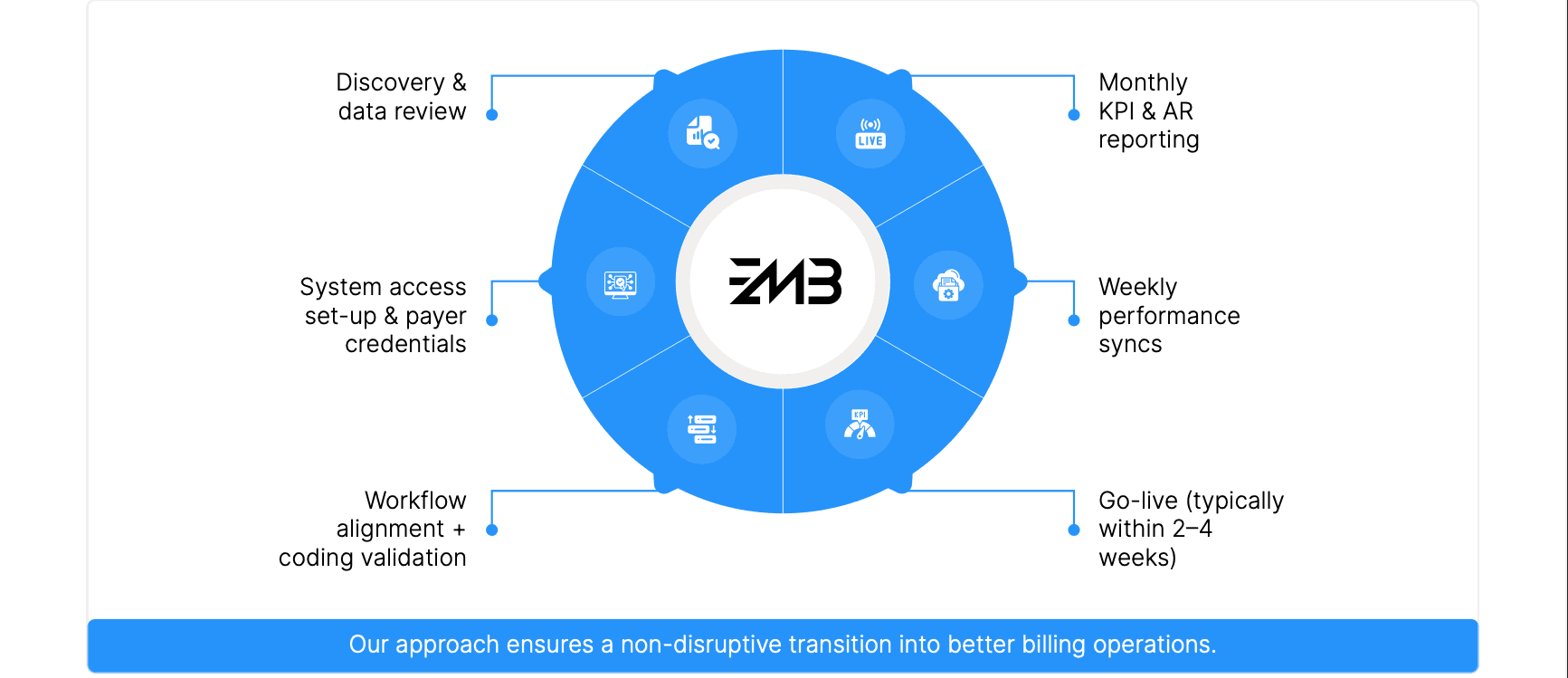
Reducing denials starts long before claim submission. Accurate registration, eligibility verification, authorization review, documentation, coding, and timely charge entry can prevent avoidable errors from moving further through the billing cycle.
When a claim is denied, simply submitting it again without identifying the cause can waste valuable time. The billing team should determine whether the denial resulted from eligibility, coding, medical necessity, authorization, documentation, duplicate billing, timely filing, or another payer requirement.
An effective Revenue Cycle Management strategy connects these activities instead of treating them as isolated tasks. Revenue Cycle Management (RCM) also gives practices a broader view of where money is being delayed.
Useful billing teams review A/R by payer and age, track denial categories, and identify recurring problems. Addressing the original cause of a denial can have a greater long-term effect than repeatedly correcting individual claims after they fail.
Why Choose Expert Medical Billing for Your Integrative Health Practice?
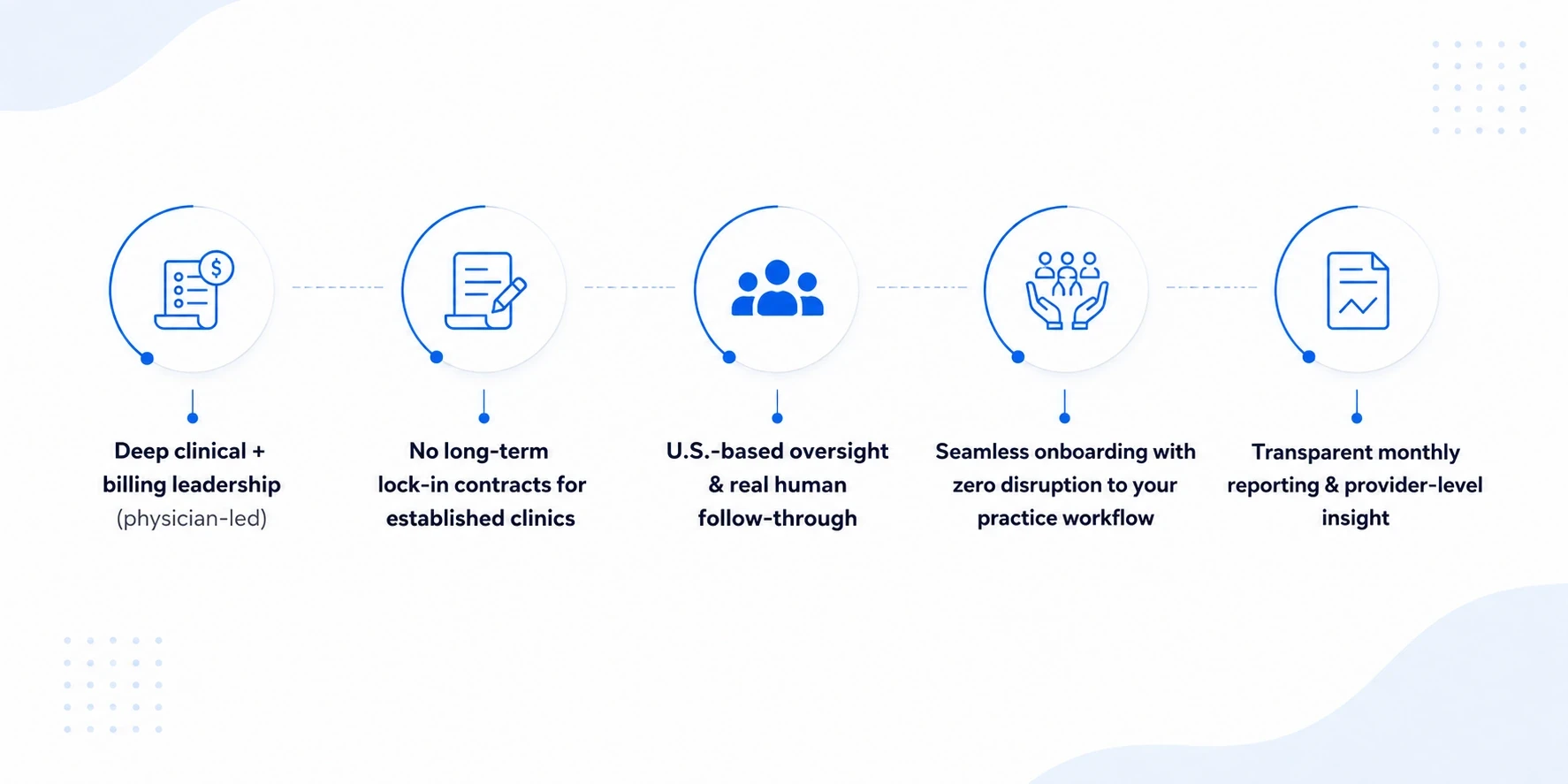
A billing company should fit the operational needs of the practice rather than forcing every provider into the same workflow. Integrative healthcare makes that flexibility particularly valuable because practices may combine several specialties, payment arrangements, and service types.
Expert Medical Billing can support practices with claim processing, follow-up, denial management, payment posting, reporting, and other Medical billing activities while allowing providers to maintain control over clinical decisions.
Specialty-Focused Billing Knowledge
Specialty knowledge helps a billing team recognize situations that deserve additional review before claims are submitted. An Experienced medical billing team can also work with office staff to identify recurring administrative problems affecting reimbursement.
For a Skokie practice, a Medical Billing Expert should understand that effective billing is not limited to selecting codes. Documentation quality, payer policies, patient benefits, provider credentials, and internal workflows can all influence the final payment.
Claims, Denials, and A/R Management
Unpaid claims should not disappear into an aging report. A structured A/R process categorizes outstanding balances, identifies claims requiring immediate action, and follows payer responses until an appropriate resolution is reached.
Denial trends should also be reviewed collectively. If the same issue repeatedly affects claims, fixing the underlying workflow can be more effective than addressing each denial individually.
Clear Financial Reporting
Reporting should help practice owners make decisions. Useful reports can provide visibility into collections, outstanding A/R, denial trends, payer performance, adjustments, and other important financial indicators.
Instead of receiving large spreadsheets without explanation, providers should be able to understand what is changing and which areas need attention. Clear reporting makes RCM easier to evaluate and helps practices measure whether their billing partner is actually improving performance.
What Are the Benefits of Outsourcing Integrative Health Billing?
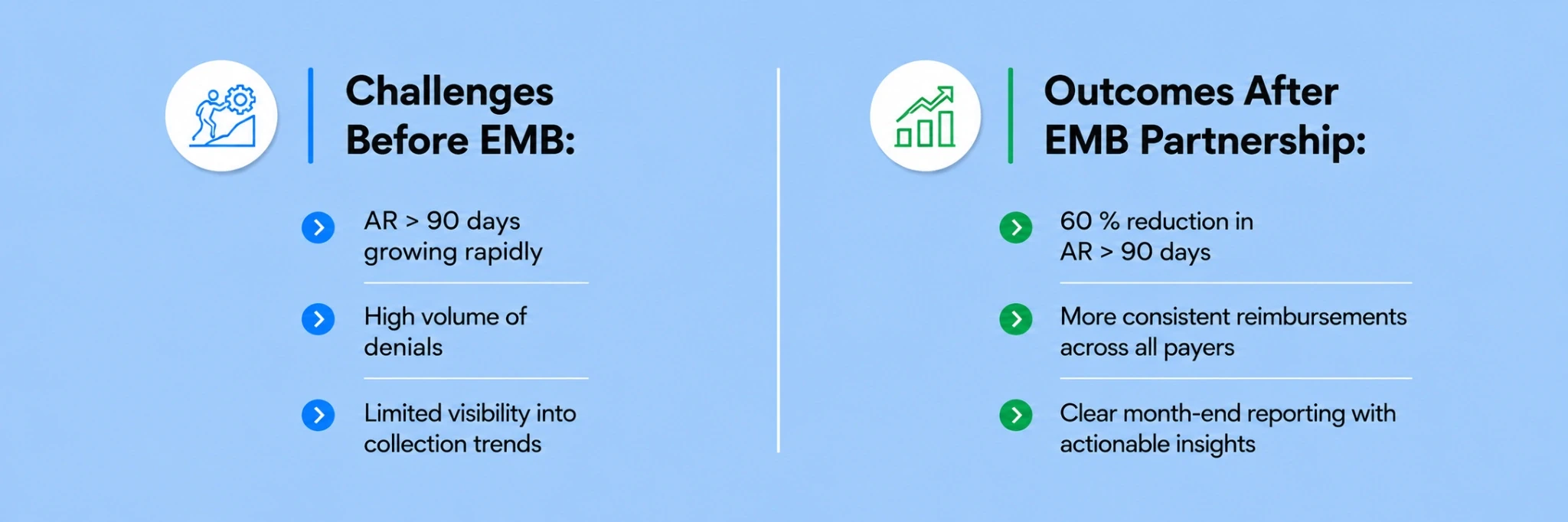
Maintaining an internal billing department requires recruiting, training, supervision, technology, and ongoing education. Small practices can become particularly vulnerable when billing knowledge is concentrated in one employee.
Outsourcing can give a practice access to specialized resources while allowing its own employees to focus more heavily on patients and office operations. Potential advantages include:
- More consistent claims and A/R follow-up.
- Reduced dependence on a small internal billing team.
- Access to specialized billing knowledge.
- Easier adjustment when patient or claim volume increases.
- Greater visibility into denials and outstanding balances.
- Less routine billing administration for clinical staff.
Outsourcing does not remove the provider's responsibility for accurate clinical documentation. It creates a division of responsibilities in which clinical teams document patient care while billing specialists manage much of the financial workflow.
How Does EMB Customer Support Help Your Practice?
Billing questions often need timely answers. Front-office employees may need clarification about eligibility, providers may have documentation questions, and practice managers may want updates on outstanding claims or financial reports.
Reliable Customer support provides a direct communication path between the practice and its billing operation. Instead of waiting until a monthly report reveals a problem, staff can raise questions while the issue is still current.
Communication also improves accountability. When the practice and billing team can easily exchange missing information, claim corrections and payer follow-ups can move forward without unnecessary delays.
How Does EMB Pricing Work for Integrative Health Practices?
There is no single pricing structure that fits every integrative practice. Cost can depend on provider count, monthly claim volume, specialty complexity, payer mix, existing A/R, and the range of services the practice wants to outsource.
EMB Offers Simple, Transparent, and Value-Driven Pricing Plans
- No hidden fees
- No long-term contract lock-in for established practices
- Cost is aligned with results when you grow, we grow
A smaller clinic seeking standard claim management may have different requirements from a multi-provider practice that needs extensive denial recovery, old A/R work, reporting, and additional billing assistance.
Practices should therefore evaluate price together with service scope. The cheapest proposal may not provide the strongest value if important tasks require additional fees or remain the responsibility of the practice.
Before signing an agreement, ask exactly which services are included, how additional work is priced, what reporting is provided, and whether there are onboarding or termination requirements.
What Do Healthcare Providers Say About Expert Medical Billing?
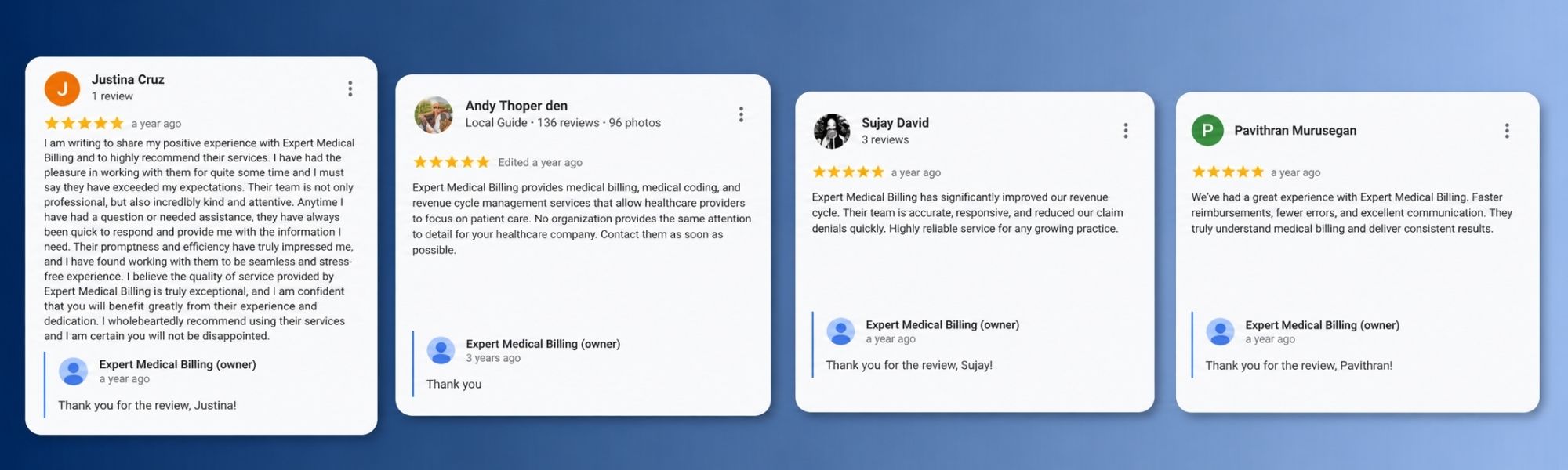
Testimonials can help practices understand what working with a billing company may be like, but they should be evaluated alongside measurable service expectations. Providers should pay attention to comments about responsiveness, reporting, follow-up, communication, and reliability rather than focusing only on broad claims about increased revenue.
It is equally useful to ask a prospective billing company how onboarding is managed, who handles day-to-day questions, how often A/R is reviewed, and how denials are escalated.
Healthcare organizations should also consider how vendors handle protected information. Understanding applicable HIPAA Rules and Regulations should be part of evaluating any outside organization that may work with protected health information.
A strong billing relationship ultimately depends on consistent execution. Technology matters, but experienced people, defined responsibilities, useful reporting, and dependable follow-through are what keep the financial workflow moving.
Conclusion
Selecting an integrative Health Billing Company in Skokie requires looking beyond basic claim submission. Practices should evaluate specialty knowledge, insurance verification, coding processes, denial management, A/R follow-up, communication, reporting, security practices, and the ability to manage both insured and self-pay services.
Integrative care creates unique financial challenges because different treatments, provider types, and payment arrangements may exist within the same practice. A billing partner should be capable of organizing those moving parts without making the process more complicated for providers or patients.
Expert Medical Billing can support Skokie healthcare practices that want a more structured approach to billing administration and financial follow-up. The best partnership is one that gives the practice greater visibility into its revenue while reducing the time clinical staff spends resolving routine billing problems.
Wondering what this looks like in your center?
A discovery call is a straightforward conversation about where your revenue cycle stands today and who is accountable for it.