
Essential Revenue Cycle Management Strategies For 2026
Expert Medical Billing offers high-quality medical billing, coding, and revenue cycle management. Improve billing efficiency and increase revenue per visit.
April 11, 2026 · 7 min read
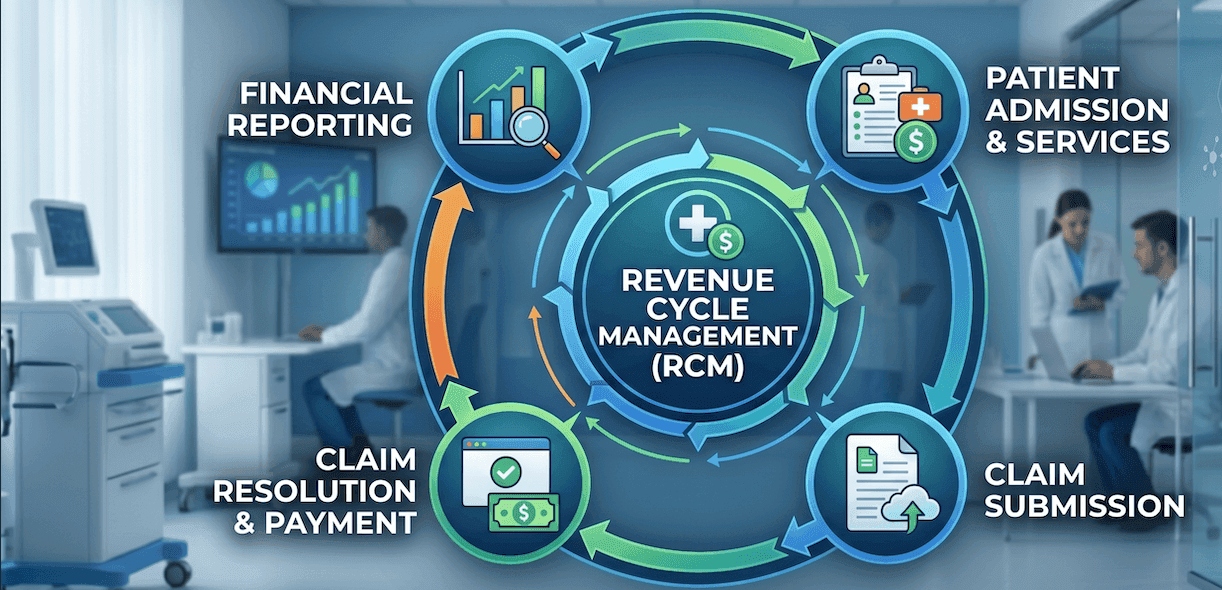
Healthcare organizations are entering a new phase of financial management. Rising operational costs, evolving payer requirements, stricter compliance standards, and growing patient expectations are forcing providers to rethink how they manage revenue. In 2026, revenue cycle management (RCM) is no longer just about submitting claims and collecting payments. It has become a strategic system that directly impacts financial stability, patient satisfaction, and operational efficiency.
Healthcare practices that continue using outdated billing processes may struggle with increasing claim denials, delayed reimbursements, and revenue leakage. At the same time, organizations that adopt smarter revenue cycle management strategies can improve cash flow, reduce administrative stress, and create a more predictable financial future.
This guide explains the most effective revenue cycle management strategies for 2026 and how healthcare providers can strengthen their financial performance in a rapidly changing industry.
Understanding Modern Revenue Cycle Management
Revenue cycle managementrefers to the complete financial process involved in patient care. It starts when a patient schedules an appointment and continues through insurance verification, medical coding, claim submission, payment posting, denial management, and patient collections.
In previous years, many healthcare providers viewed RCM mainly as a back-office function. In 2026, it plays a much larger role. Healthcare organizations now depend on advanced RCM systems to maintain profitability while managing complex insurance regulations and growing patient payment responsibilities.
Modern RCM focuses on:
- Faster reimbursements
- Reduced claim denials
- Accurate coding and documentation
- Better patient financial communication
- Automation and data-driven decisions
- Improved operational efficiency
As healthcare reimbursement models continue to evolve, practices must adopt proactive strategies instead of reacting to financial problems after they occur.
Major Revenue Cycle Challenges Healthcare Practices Face in 2026
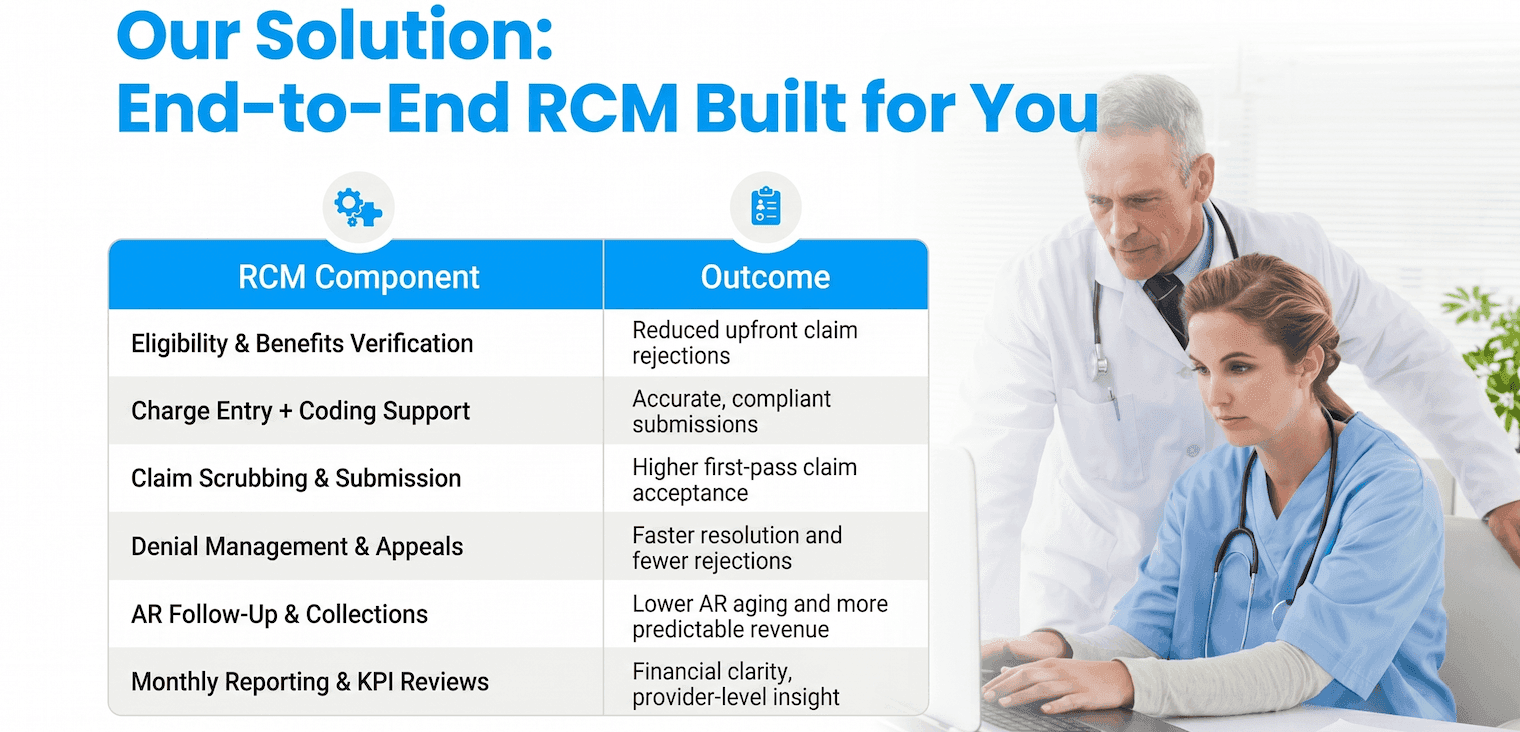
Healthcare providers are dealing with several financial and administrative challenges that directly affect revenue performance.
Rising Claim Denials
Claim denials continue to increase across many specialties. Even minor documentation errors, missing modifiers, or incorrect patient information can lead to delayed or rejected payments. Many practices lose revenue simply because denied claims are not appealed properly or corrected quickly.
Insurance Verification Problems
Eligibility verification remains one of the most common causes of billing delays. Inaccurate insurance information can create payment interruptions and patient frustration. As insurance plans become more complex, front-end verification becomes even more important.
Staffing Shortages
Many healthcare organizations continue facing shortages in billing, coding, and administrative staff. Smaller practices especially struggle to manage growing workloads while maintaining billing accuracy.
Frequent Payer Policy Changes
Insurance companies regularly update authorization rules, coding guidelines, and reimbursement policies. Practices that fail to keep up with these changes often experience higher denial rates and compliance risks.
Increasing Patient Payment Responsibility
Patients now carry higher deductibles and out-of-pocket expenses than ever before. Collecting payments from patients has become a major component of the revenue cycle.
Top Revenue Cycle Management Strategies for 2026
Healthcare organizations need smarter and more proactive financial systems to stay competitive. The following strategies can significantly improve revenue performance in 2026.
Strengthen Front-End Patient Verification
The revenue cycle begins long before a claim is submitted. Accurate patient intake processes help reduce errors that may later cause denials or delayed reimbursements.
Healthcare practices should verify:
- Patient demographics
- Insurance eligibility
- Coverage limitations
- Referral requirements
- Prior authorizations
Automated eligibility verification tools can reduce manual work while improving accuracy. Many organizations now use real-time verification systems to confirm patient insurance information before appointments.
Strong front-end processes help practices avoid preventable billing issues and improve overall reimbursement speed.
Use AI and Automation in Medical Billing
Artificial intelligence is transforming revenue cycle management in 2026. AI-powered systems can automate repetitive tasks, improve billing accuracy, and identify financial risks before they become major problems.
Healthcare organizations are using AI for:
- Automated claim scrubbing
- Coding assistance
- Denial prediction
- Payment trend analysis
- Prior authorization workflows
- Accounts receivable monitoring
Automation reduces administrative burden and allows billing teams to focus on higher-level financial management tasks.
For example, AI-based denial management systems can identify patterns in rejected claims and recommend corrections before submission. This helps practices improve clean claim rates and reduce reimbursement delays.
Focus on Denial Prevention Instead of Denial Correction
Many healthcare providers spend too much time correcting denied claims instead of preventing denials from happening in the first place.
A denial prevention strategy includes:
- Real-time claim validation
- Accurate coding reviews
- Insurance verification checks
- Documentation audits
- Payer-specific billing rule monitoring
Practices should also track denial trends regularly. Identifying repeated denial causes can help organizations improve billing workflows and staff training.
Reducing denials not only improves cash flow but also lowers the administrative costs associated with reworking claims.
Improve Medical Coding Accuracy
Coding errors remain one of the leading causes of claim denials and compliance risks. In 2026, accurate medical coding is more important than ever because payer scrutiny continues to increase.
Healthcare organizations should invest in:
- Specialty-specific coder training
- Regular coding audits
- Updated ICD-10 and CPT education
- Clinical documentation improvement programs
Specialty practices such as cardiology, gastroenterology, behavioral health, and orthopedics often face complex coding requirements. Even small coding inaccuracies can result in lost revenue or payer audits.
Accurate documentation and coding help maximize reimbursements while reducing legal and compliance risks.
Optimize Patient Payment Collection
Patient collections are becoming a larger part of healthcare revenue. Many practices struggle to collect balances after services are completed.
In 2026, successful organizations focus on creating a better patient financial experience. Patients are more likely to pay when billing processes are simple and easy to understand. Providing upfront cost estimates can also reduce confusion and improve collection rates.
Healthcare organizations that prioritize patient convenience often see faster payments and fewer collection problems.
Invest in Data Analytics and Reporting
Modern revenue cycle management depends heavily on data analysis. Practices that monitor financial performance metrics can identify weaknesses before they affect profitability.
Important RCM metrics include:
- Clean claim rate
- First-pass resolution rate
- Days in accounts receivable (A/R)
- Denial rate
- Net collection rate
- Patient collection rate
Advanced analytics tools allow healthcare organizations to track trends, measure staff performance, and forecast revenue more accurately. Data-driven decision-making helps practices improve efficiency while reducing financial uncertainty.
Technology Trends Transforming RCM in 2026
Technology continues reshaping healthcare finance. Several major innovations are expected to influence revenue cycle management throughout 2026.
AI-Powered Revenue Platforms
AI systems now automate many tasks that previously required manual intervention. These platforms improve claim accuracy, reduce delays, and enhance financial forecasting.
Cloud-Based Billing Systems
Cloud technology allows practices to access billing data securely from multiple locations. It also improves scalability and simplifies software updates.
Predictive Analytics
Predictive analytics tools help organizations forecast denial risks, payment delays, and patient collection challenges before they occur.
Patient-Centered Financial Technology
Modern billing platforms focus on improving patient engagement through online payment systems, automated statements, and financial transparency tools. Practices that adopt these technologies can improve efficiency while delivering a better patient experience.
Key Revenue Cycle Metrics to Monitor in 2026
Healthcare organizations should consistently track performance indicators to maintain strong financial health.
Clean Claim Rate
This measures the percentage of claims accepted without edits or denials. A higher clean claim rate indicates efficient billing processes.
Days in Accounts Receivable
This metric tracks how quickly payments are collected. Lower A/R days generally indicate healthier cash flow.
Denial Rate
Monitoring denial trends helps practices identify recurring billing or documentation problems.
Net Collection Rate
This shows how effectively a practice collects the revenue it is entitled to receive.
Patient Collection Rate
As patient responsibility grows, this metric becomes increasingly important for financial stability.
Regular performance reviews help organizations make informed operational decisions.
Common Revenue Cycle Mistakes to Avoid in 2026
Even well-managed practices can lose revenue due to avoidable errors.
Ignoring Small Denial Patterns
Minor denial trends can eventually become significant revenue problems if left unresolved.
Delayed Claim Submission
Late claim filing can lead to missed reimbursement deadlines.
Poor Documentation
Incomplete or unclear clinical documentation increases denial risk and compliance exposure.
Lack of Financial Transparency
Patients are more likely to delay payments when billing information is confusing or unclear.
Avoiding these mistakes helps organizations maintain healthier cash flow and stronger financial performanc.
The Future of Revenue Cycle Management Beyond 2026
Revenue cycle management will continue evolving as healthcare becomes more technology-driven and patient-focused.
Future trends may include:
- Fully automated billing workflows
- Predictive reimbursement modeling
- AI-assisted compliance monitoring
- Real-time insurance adjudication
- Expanded patient self-service billing tools
Value-based care models may also continue influencing reimbursement structures. Healthcare organizations that adapt early will likely gain stronger financial stability and operational efficiency.
Conclusion
Revenue cycle management in 2026 requires a proactive and technology-driven approach. Healthcare organizations can no longer rely on outdated billing methods if they want to remain financially stable and competitive.
Practices that strengthen patient verification, improve coding accuracy, prevent denials, invest in automation, and optimize patient collections will be better positioned for long-term success.
At the same time, healthcare providers must continue monitoring industry changes, payer regulations, and emerging technologies that affect reimbursement processes.
Effective revenue cycle management is not simply about billing claims. It is about building a stronger financial foundation that supports better patient care, operational growth, and sustainable healthcare delivery in the years ahead.
Wondering what this looks like in your center?
A discovery call is a straightforward conversation about where your revenue cycle stands today and who is accountable for it.